Heat gain can drastically undermine your cooling efforts, particularly in our warm Santa Cruz climate with its abundant sunshine. Going room by room in your house, you can find ways to prevent heat gain and boost your cooling, thereby increasing efficiency and lowering bills.
Heat gain, also known as thermal or solar gain, occurs in several ways:
- Conduction, when heat travels through walls and ceilings.
- Radiation, when sunlight penetrates windows and skylights.
- Infiltration, where warm air and moisture penetrate through cracks in walls.
- Indoor heat, generated by people and appliances.
Here are some prime spots in your home to concentrate on when preventing heat intrusion.
Windows
Forty-eight percent of thermal gain comes through windows. To prevent radiation intrusion, block sunlight by planting trees and installing awnings and screens. Inside the home, add shutters, blinds and curtains, or add tinted film.
Walls and Doors
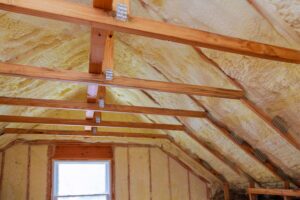
About 19 percent of thermal gain intrudes through windows, doors and ceilings. Painting outside walls a light color can cut down on conductive thermal gain. Insulation in walls prevents infiltration from warm air or moisture. R-19 is appropriate for exterior walls, and at least R-30 is recommended for ceilings.
Interior Sources
People and appliances account for about 14 percent of thermal gain. Avoid using the worst heat or moisture generators such as washers, dryers and dishwashers during the hottest part of the day. Avoid cooking when it’s hottest.
Weatherizing
Air and moisture leaks through cracks and gaps generate 13 percent of heat gain through infiltration. Repair weather stripping around windows and exterior doors, sealing cracks and gaps so that air doesn’t leak into the home.
Use caulk around window frames, as well as penetrations such as cables, vents, electrical boxes and pipes. Install foam gaskets and insulation on switches and outlets. Make sure windows and doors are tightly shut, and that fireplace dampers are closed.
Ceiling
Six percent of thermal gain occurs through ceilings. Install ventilation in the attic to prevent overheating.
For more on heat gain, visit our website for in-depth information on most HVAC topics, or just give us a call at (408) 677-2920. You can also fill out our online contact form.